


Summary
For decades, the gold standard for biomechanical measurement has been marker-based optical motion capture. Here, a trained technician places reflective markers on anatomical landmarks on the human body, a process that takes 30 minutes or more. Infrared cameras then track those markers through a calibrated volume, producing high-fidelity kinematic data. It works extremely well — when you have a controlled lab, specialized staff, willing research participants who can tolerate the setup, and the time to do it properly.
But what happens when any of those conditions isn't met?
This is the problem that markerless motion capture was built to solve. And it's a problem that matters more than most biomechanics professionals realize, because the limitations of lab-only data collection have quietly shaped what biomechanics research can and can't tell us.
The Lab Is Not the World
The environments where biomechanical data matters most are rarely the environments where it's easy to collect. Elite sports performance doesn't happen in a gait lab. Pediatric movement research involves children who may not tolerate marker placement. Occupational biomechanics requires studying actual work environments. Fall risk and gait research in older adults is most valuable in the community settings where falls actually occur.
Traditional motion capture forces researchers and practitioners to bring the world into the lab — a treadmill instead of a track, a hallway walk instead of a community stroll, a controlled cutting task instead of a live sport maneuver. The data is clean, but its ecological validity is limited.
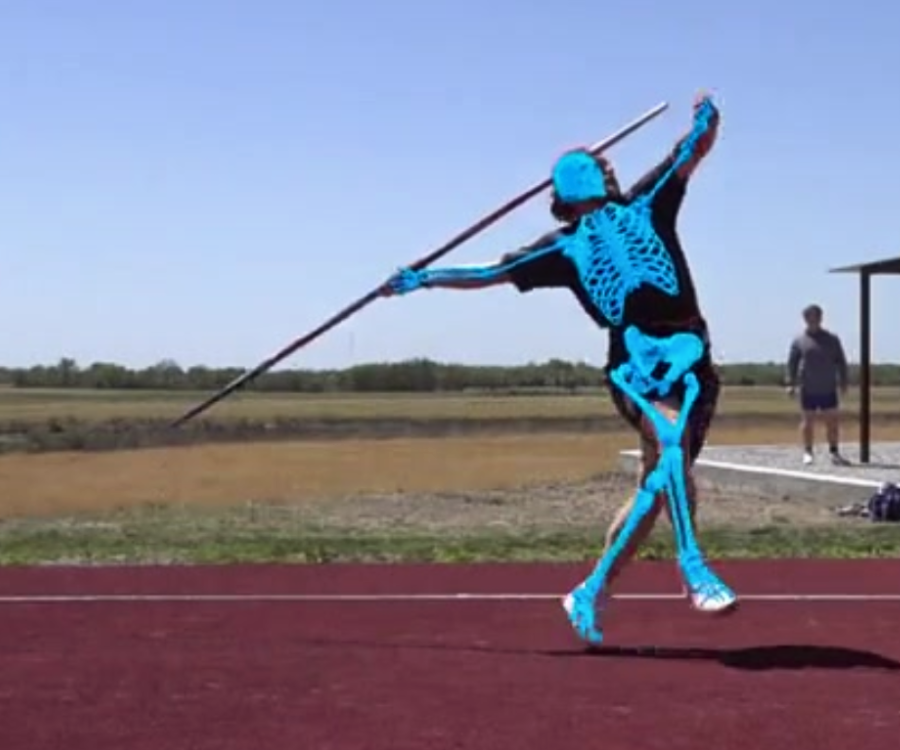
Theia3D takes the opposite approach: bring the lab to the world. Because the system works with standard synchronized RGB cameras rather than infrared arrays, it can be deployed wherever cameras can be mounted and connected. Researchers have used it in MLB stadiums, school gymnasiums, community research settings, outdoor tracks, and occupational environments.
What This Changes for Research
When data collection is no longer confined to a lab, research designs change. Studies that previously required participants to travel to a specialized facility can be conducted in their natural environments. Longitudinal tracking studies that were impractical due to setup burden become feasible. Large-cohort research that was bottlenecked by per-participant marker placement time can scale to meaningful sample sizes.
The research implications extend beyond logistics. When research participants move in their own environment, wearing their own clothes, without sensors attached to their bodies, the movement data reflects how they actually move — not how they move when instrumented and self-conscious in an unfamiliar lab setting.
This matters particularly for populations where natural movement is the research question: older adults walking in community settings, athletes performing at full intensity, workers performing actual job tasks, children playing without adult-imposed constraints.
What Theia3D Validated Research Shows
Theia3D has been validated across more than 50 independent, peer-reviewed studies. The evidence base covers:
- Gait biomechanics research in healthy adults, older adults, children, and research populations with movement conditions
- Running biomechanics across multiple speeds
- Sport-specific tasks including baseball pitching and batting, soccer change of direction, basketball movement
- Return to training assessments and functional movement tasks
- Ramp and stair walking
- Upper extremity movements
Across this body of research, Theia3D has consistently demonstrated agreement with marker-based systems that falls within the same range as the between-operator variability of traditional systems — meaning the measurement uncertainty introduced by switching to markerless is comparable to the measurement uncertainty introduced by having a different technician place the markers.
For researchers evaluating whether markerless is "good enough": the question isn't whether it matches the gold standard perfectly. No measurement system does. The question is whether the uncertainty is small enough to be useful for the decisions you're making — and for most biomechanics research and applied performance applications, the peer-reviewed evidence says yes.
The Data Privacy Advantage
There's an additional advantage that often goes underappreciated: local processing. All Theia3D computation happens on the user's hardware. No video files, participant data, or analysis results are transmitted to Theia or any external provider.
For research institutions working under IRB protocols, organizations with data governance requirements, and professional sports organizations with athlete data confidentiality obligations, this is a significant operational advantage. The system doesn't introduce cloud dependencies or third-party data exposure risks.
The Shift That's Already Underway
The question isn't whether markerless motion capture will replace lab-based systems in certain applications — it already has, in many of the settings where biomechanics data is most valuable. The question is how quickly research programs and applied practitioners will adapt their workflows to take advantage of what's now possible.
Theia3D was built for that transition. Contact us to discuss how it fits your specific research or applied biomechanics needs.